

The right-wing movement that claims to oppose child sex trafficking and abuse has been revealed over and over to be nothing more than an empty platitude weaponized against historically marginalized groups.
Another day of me scrolling mindlessly on TikTok, and a conservative, Christian family vlogger came up on my fyp. I was confused at how the algorithm had misread my preferences so poorly. Nothing about me says “conservative Christian” or “family vlogger.” I’m a left-leaning, progressive political creator whose day job is in federal privacy and cybersecurity law. I do talk about parenting, but I don’t publicly post my child (in an effort to not completely screw up his Internet footprint). So this blonde, prayer warrior who popped up on my page with her new bundle of joy was out of the ordinary.
After a moment, I realized that someone else was sharing her video and making commentary about it. This blonde influencer was Brittany Dawn, a vlogger rife with controversy, and her latest scandal involved that baby in her arms. That wasn’t Brittany’s legal child; that was a foster child, and the Internet was (rightfully) in an uproar at this woman monetizing content made with a foster baby.

Brittany wasn’t tapping into a new market. Family blogs, accounts, and channels are all the rage. But what perplexes me is how often conservative families engage in this form of media. Their belief system claims to center around “traditional family values” and the rejection of anything that can corrupt children. They tout being pro-life and anti-perversion. So why are they exposing their kids to millions of unknown viewers and profiting off of their childhoods?
One of my biggest pet peeves is to watch these child-centered accounts put their children’s faces in front of their hateful ideology. In this TikTok video of mine, I addressed a comment that I received from an Instagram account arguing anti-LGBTQ sentiments. Immediately, I noticed that the profile picture was of a young girl.
When I clicked on the profile, the entire account was created for that 4-year-old child in the picture. It had her name and face everywhere with captions written by her mother as if they were actually from the child’s first-person perspective. In my video, I questioned why the mother was so concerned with the LGBTQ community and not the unknown men and women who were following the account that she made for her daughter. I blocked out the account information and the profile picture as well as deleted her comment from my post.

I am not a staunch critic of people who casually post their children on social media. I don’t mind creators who share a limited view of their children in their content. But when your entire social media presence centers around children – who can’t consent – that’s disturbing. This is especially true since we have zero laws or regulations protecting child influencers the same way we protect child actors. There are activists pushing for legislation to protect these children from being exploited by their parents on sites such as YouTube.
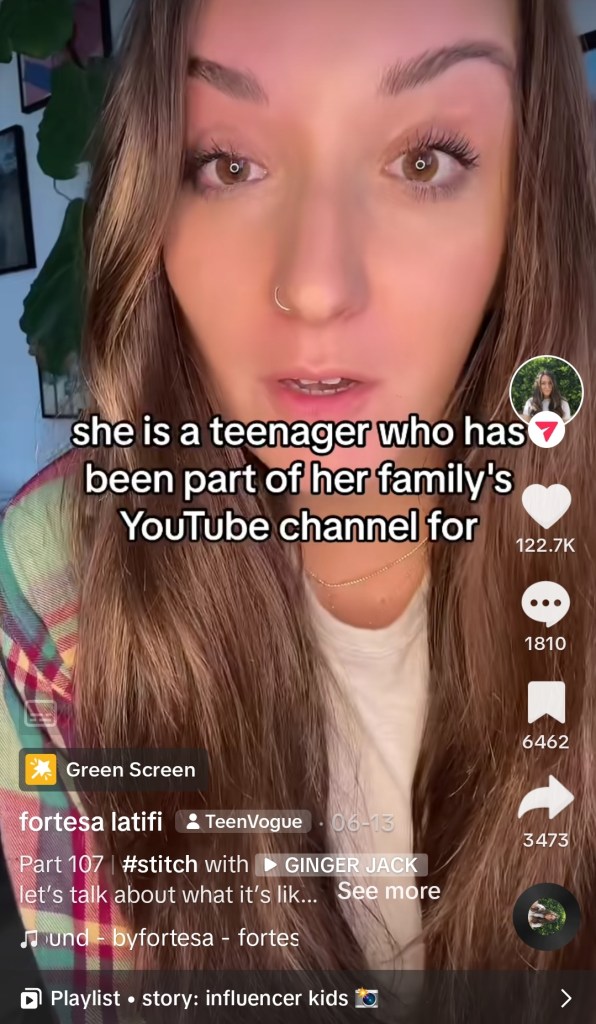
Fortesa Latifi has been covering this issue both on her TikTok account, @byfortesa, and in her journalism with publications such as Teen Vogue. In her article, “Influencer Parents and The Kids Who Had Their Childhood Made Into Content,” Latifi interviews a former child influencer who she calls “Claire.” Claire’s parents made so much money from their family YouTube channel that they quit their jobs. Claire talks about the struggles of being a child influencer, the complicated and difficult relationship she now has with her parents, and how she is considering going no-contact with them when she turns 18-years-old.
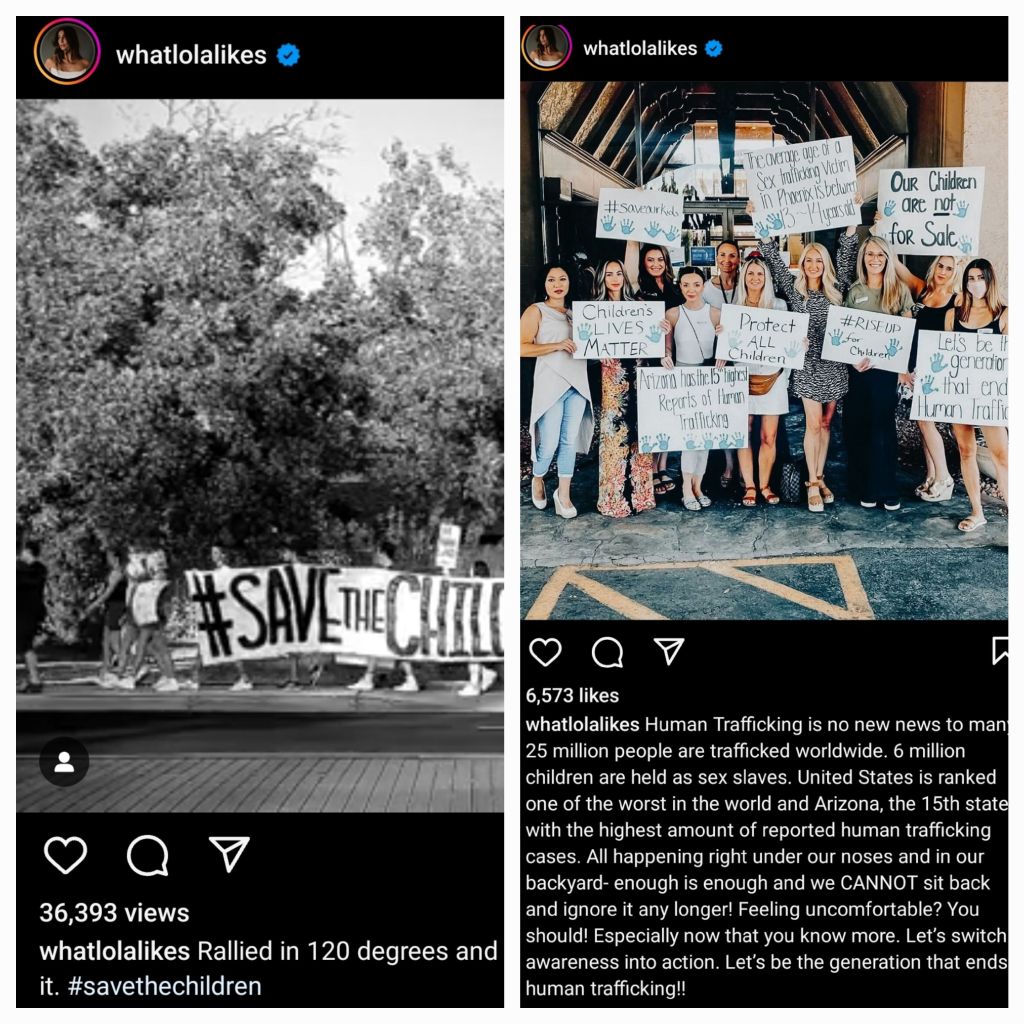
With this evidence of actual harm to children and a major loophole in the law, you would think that conservative families would fight against child influencer exploitation and stop perpetuating baseless conspiracies such as “Pizzagate” or homophobic grooming accusations. But that won’t happen when they are just as guilty of exploiting their children as any other vlogger, from the LaBrant Family to Sam and Nia. Not to mention, they claim to do their exploitation in the name of Jesus, as if the only way to be a shining pillar of Christianity is to use your children for clicks and likes.
What’s worse is the way that pregnancy and children are a commodity in these circles. The “traditional family” life that these families perpetuate online reduces the women to nothing more than mothers and homemakers. To stay relevant, the women must keep having babies. The outcome of this mentality is not only harmful to the children but potentially tragic for the mothers as well. In December 2020, faith and family influencer, Emily Mitchell, died of a pulmonary embolism at 36 weeks pregnant. It would have been her fifth c-section.

When children are placed front and center on these platforms, they are at a heightened risk for abuse. Strangers – including pedophiles – are able to easily consume the details of these children’s lives because the parents serve it up on a platter. But a common rebuttal to this observation is that the conservative parents insist that it’s not their problem if someone else has ill-intent. The families view themselves as “innocent” in what they are posting and feel that they cannot be responsible for anyone else making their posts into something negative. But then those same parents turn around and attack progressive or marginalized communities, claiming that they are a threat to their children.
This kind of cognitive dissonance is mind boggling and further proves that this conservative movement is not about keeping kids safe. Instead, it’s just a weak excuse for folks on the right to justify bigotry. ◇


 The Devil's Opposing Counsel